£132.5m for After-School Clubs: Will Your Child's School Actually Benefit?
I have plenty of grounded detail now. Let me write the article.
The £132.5 million "Every Child Can" programme was announced this week by Education Secretary Bridget Phillipson and Culture Secretary Lisa Nandy, alongside a new set of enrichment benchmarks that Ofsted will inspect against. Here is what it actually means for your child's school, and what to ask before September.
What has been announced
The £132.5 million "Every Child Can" programme is funded through the Dormant Assets Scheme and will deliver new activities programmes through schools, community programmes, weekend activities and holiday provision. It sits alongside a parallel package: £22.5 million over three years to create a better enrichment offer in up to 400 schools, and £600 million over the next three years for the Holiday Activities and Food programme.
The government's framing is twofold. First, ministers want to widen access so that, in Bridget Phillipson's words, sport and the arts are not "just for the lucky few". Second, the announcement is timed deliberately ahead of expected restrictions on social media use for under-16s — the funding aims to provide activities that keep children occupied and help them build new skills, such as music groups, engineering clubs, debating societies and football clubs.
Crucially, this is not just money. It comes with a new accountability framework. Ofsted will incorporate enrichment into its assessment of personal development, and parents will eventually be able to see their local school's enrichment offer through new "school profiles".
The five enrichment categories
The DfE has published benchmarks built around five strands. Schools will be asked to ensure that every child has access to activities across five categories — civic engagement, arts and culture, nature and adventure, sport, and life skills — forming what the department calls a "core enrichment entitlement".
In practice, that means a school's offer should now span:
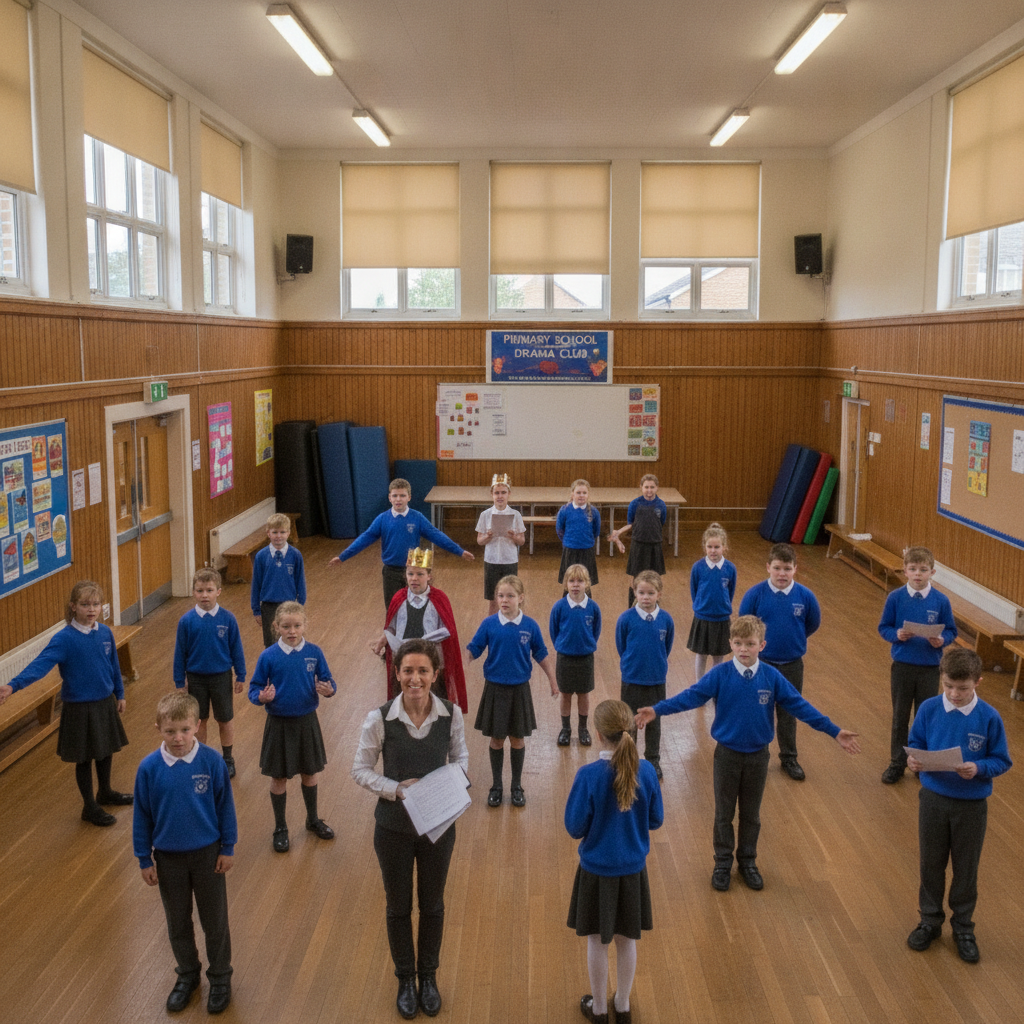
- Arts and culture — music, drama, museum and gallery visits
- Sport — team sport, physical activity, competitive and recreational
- Nature and adventure — outdoor learning, residentials, environmental projects
- Civic engagement — volunteering, democracy, community work
- Life skills — practical skills for adulthood, including financial literacy
Schools will also be able to use a self-assessment and action planning tool to help them assess their offer against the eight benchmarks.
Which schools and year groups will see the money?
This is where parents need to read the small print. The headline figure of £132.5 million sounds substantial, but it is spread across England, across primary, secondary and community settings, and across in-term, weekend and holiday provision. Not every school will receive a direct cash allocation.
A few things are clear from the announcements so far:
- The smaller £22.5 million pot — announced earlier in August — is targeted. It will fund a better enrichment offer in up to 400 schools. Those schools have not all been individually named in the publicly reported coverage, but the focus is on areas where children are most likely to be "isolated" from extra-curricular opportunities.
- The larger £132.5 million "Every Child Can" pot is broader. It will support activity delivered both in schools and through community organisations, weekends and holidays — so some of the money will flow to youth and voluntary-sector partners rather than directly into school budgets.
- Disadvantaged pupils are an explicit priority. Enrichment activities should be accessible and inclusive for all pupils, particularly those who are at risk of missing out. This includes those with SEND, vulnerable and disadvantaged pupils, young carers and care-experienced children.
On year groups, the documents do not draw a hard line between primary and secondary. The Ofsted accountability piece applies across the board, but the funded "Every Child Can" activities are aimed at children and young people generally, with community and holiday strands likely to be most visible to primary-aged pupils and the weekend and skills strands more relevant to Key Stage 3 and 4.
The timeline problem
If you are wondering whether you will see anything change by September, you are not alone — and school leaders have raised the same concern. Schools will have less than a term to prepare the new enrichment entitlements before Ofsted inspects them, with sector leaders warning this is a "recipe for heightening stress".
In other words, the inspection lever is moving faster than the funding. A school may be judged on its enrichment offer this academic year without having received a penny of the £132.5 million directly. That gap matters when you are trying to work out whether your child will actually get new clubs or whether the school will simply be asked to do more with what it has.
What to ask your school now
Most secondaries hold a parents' evening or transition meeting in the autumn term. These are the questions worth raising — politely, but plainly.
- Has the school received any direct allocation from the £132.5 million Every Child Can programme, or from the £22.5 million pot for up to 400 schools? If yes, what is being funded and when does it start? If no, what is the school's plan to meet the new enrichment benchmarks anyway?
- How does the current offer map onto the five categories? Ask specifically about civic engagement and nature/adventure — these are the strands most schools currently do least.
- What does the school do about cost? Trips, kit and instruments still carry direct and indirect costs to parents. Ask what is in place for Pupil Premium pupils (children eligible for additional government funding because they have, for example, been registered for free school meals in the last six years) and for families who can't easily pay extras.
- Will there be weekend or holiday provision delivered with a community partner? Much of the new money flows through voluntary-sector partners rather than schools. Find out which local youth organisations the school works with.
- How is take-up tracked? A club that exists on paper but is attended by the same twelve children every week is not the same as a genuine offer. Ofsted will be looking at access, not just provision.
- Where will this appear in the new school profile? Parents will eventually be able to see the enrichment offer published; ask when the school expects that data to be available.
Where tutoring fits — and where it doesn't
Enrichment funding is not a substitute for academic catch-up, and it is not designed to be. If your child is behind in maths or reading, an after-school debating club is excellent for confidence but will not move a SATs scaled score or a GCSE grade. The two sit alongside each other.
What this announcement may genuinely change, if it lands well, is the quality of the wider school experience — particularly for children in families who cannot pay £200 a term for music tuition or a sports club outside school. That is worth holding the school to account on.
The short version
The government has announced £132.5 million for enrichment activities in England, built around five categories and underpinned by new Ofsted-inspected benchmarks. The money will be spread across schools, community organisations, weekends and holidays — so most schools will not receive a large direct cheque, and the change parents notice will depend heavily on local partnerships and on how quickly leaders can build the offer to match the new accountability regime. Ask your school the questions above before the end of the autumn term. The answers will tell you a lot more than the press release does.